Summary
My goal is to produce knowledge that is relevant for real-world, high-impact decision making.
- Chief Communications Officer: onAir Networks (began in February 2025)
- Education: Dickinson College (BS – Computer Science), Georgetown University (MA – Tech Policy), Carnegie Mellon University (MS – Engineering & Public Policy)
- Experience: U.S. General Services Administration, Maryland Department of Human Services, Start-Up Nation Central (Israel)
- Specialties: Information Technology, Artificial Intelligence, Broadband, Innovation Policy, Futurism
- Places Lived: New Jersey, Baltimore, Pittsburgh, Jerusalem, Washington DC (current)
- Broad skills: Policy analysis, data analysis, writing & communication, Linux & open source, Creativity
- Other Interests: Video Games, Spirituality, Bicycle riding, Travel, Bar Trivia, Theater
- Affiliations: Mensa, New Leaders Council, Internet Society, Gabr Fellowship, Royal Society of the Arts
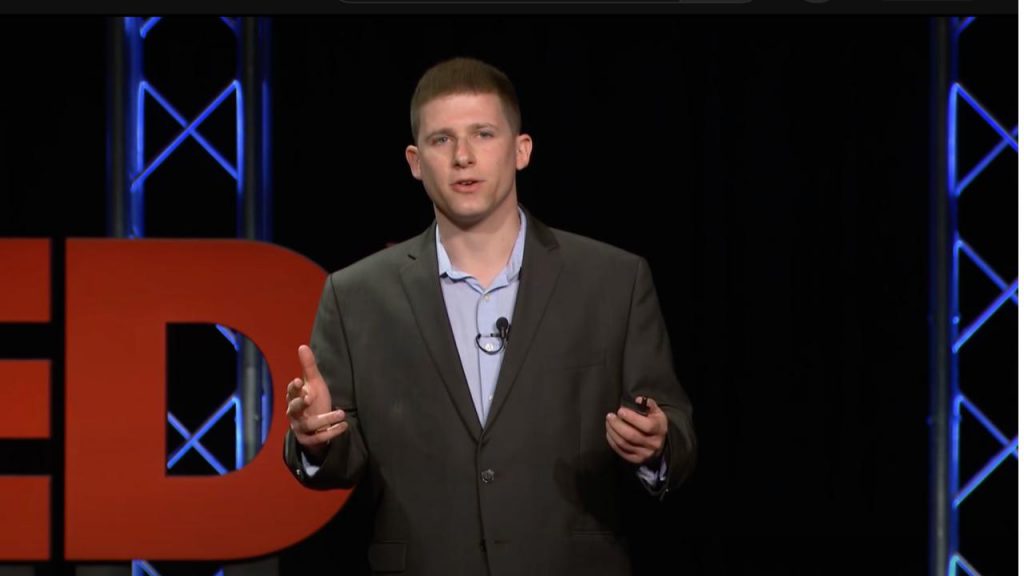
TEDx Talks – 16/06/2017 (12:11)
TEDxHerndon
The future is unknowable, but that doesn’t mean we can’t prepare for it. Futures studies provides methods and perspectives to envision different versions of the future. This field can help any person or organization to plan strategically for black swan events and other future developments that transform the world as we know it. This talk introduces the basic concepts of futures studies and the method of scenario planning.
Jeremy is a multidisciplinary technologist, researcher and policy analyst with a background in Computer Science and tech policy. He is currently a Baltimore Corps fellow placed as a data analyst with the Baltimore City Department of Social Services. He loves questions about social interactions with technology, appropriate policy responses for emerging technology issues and how to help organizations through the development and use of technology. He has given talks at venues such as StartingBloc, Hackers on Planet Earth, and the World Future Society conference on a range of futurist and technology-oriented topics. You can find him online at thepezman.flavors.me.
OnAir Post: Jeremy Pesner
News
Imagining the Digital Future – April 6, 2026
‘Human creativity and critical thinking will always have a place in the future, so long as we actively maintain those abilities and recognize our distinct advantages over AI.’
See Jeremy’s writing here.
The Imagining the Digital Future Center is a research initiative of Elon University focused on the impact of the digital revolution and the future of the ever-deepening relationship between humans and machines. The Center was established in 2000 and renamed with an expanded research agenda in 2024. Its mission is to discover and broadly share a diverse range of opinions, ideas and original research about the likely evolution of digital change, informing important conversations and policy formation.
Hundreds of experts answered the following question: “AI systems are likely to begin to play a much more significant role in shaping our decisions, work and daily lives. How might individuals and societies embrace, resist and/or struggle with such transformative change? As opportunities and challenges arise due to the positive, neutral and negative ripple effects of digital change, what cognitive, emotional, social and ethical capacities must we cultivate to ensure effective resilience? What practices and resources will enable resilience? What actions must we take right now to reinforce human and systems resilience? What new vulnerabilities might arise and what new coping strategies are important to teach and nurture?”
About
Jeremy is a policy analyst, researcher and public speaker with a focus on policy issues of information technology, telecommunications, innovation and futurism. He is passionate about this work because it allows him to apply an equity lens to the single most revolutionary force of the past two decades, which enables everyone to enjoy the benefits and abilities that these new technology bring.
In various work and volunteer capacities, Jeremy has undertaken complex data analysis, written articles about technology and futurism, organized panels and events, and published award-winning research. He has given and moderated presentations at various conferences including Hackers on Planet Earth, World Future Society, TEDx Fulbright, TEDx Herndon, and SciTalk.
He lived abroad in Israel for a year, during which he worked on the country’s technology policy at Start-Up Nation Central and participated in many lectures and trips to learn more about Israel’s social, political and religious contexts.
Outside of his professional work, Jeremy has learned a lot through his personal growth and self-development work, particularly the value that practices like meditation, yoga, neuro-emotional technique and somatic therapy can bring to addressing trauma, developing emotional intelligence and improving relationships with others. He recognizes that these types of techniques enable us to remember what makes us human, independent of whatever technologies we are using at the moment.
Jeremy earned his BS in Computer Science at Dickinson College, his MA in Communication, Culture & Technology from Georgetown University and his MS in Engineering and Public Policy from Carnegie Mellon University.
He is a member of Mensa, American Association for the Advancement of Science and the National Science Policy Network. He is also a fellow of StartingBloc, NEXUS Global Summit, the Gabr Fellowship and New Leaders Council.
Education
- Dickinson College: Bachelor of Science in Computer Science.
- Georgetown University: Master of Arts in Communication, Culture & Technology.
- Carnegie Mellon University: Masters of Science and is a PhD student in Engineering and Public Policy.
Experience
Faculty
DMS International · Seasonal
Feb 2025 – Present · Remote
This is a contract role – I am still seeking full time opportunities
Providing training to government and policy professionals on the future of AI and IT, with an emphasis on how this knowledge can be effectively integrated into management activities
Skills
Conversational AI
Analytical Skills
3 experiences at Carnegie Mellon University’s College of Engineering and 2 other companies
5 endorsements
Technology Policy
17 endorsements
Futurism
28 endorsements
Data Analysis
Endorsed by Jonathan Diaz and 1 other who is highly skilled at this
25 endorsements
JavaScript
13 endorsements
Python
9 endorsements
Photoshop
7 endorsements
User Experience
Endorsed by 2 colleagues at Georgetown University
30 endorsements
Music Production
5 endorsements
Multimedia
4 endorsements
Public Speaking
Endorsed by Pascal Rathle and 1 other who is highly skilled at this
18 endorsements
HTML
7 endorsements
User Interface
3 endorsements
Policy Analysis
Endorsed by Christina Speck who is highly skilled at this
16 endorsements
Science
4 endorsements
Ethnography
3 endorsements
Web 2.0
Endorsed by Bryan Alexander who is highly skilled at this
Endorsed by 2 colleagues at Georgetown University
3 endorsements
Report Writing
4 endorsements
Linux
2 endorsements
Technology Assessment
3 endorsements
Technical Presentations
3 endorsements
Video Games
1 endorsement
Information Architecture
2 endorsements
Usability
1 endorsement
Scenario Planning
1 endorsement
Information Technology Strategy
1 endorsement
Human Computer Interaction
1 endorsement
Knowledge Management
2 endorsements
Internet Governance
Futures Studies
1 endorsement
Innovation Systems
3 endorsements
Intellectual Property
1 endorsement
Social Innovation
3 endorsements
Intrapreneurship
1 endorsement
Knowledge Science
Agent-based Modeling
Archival Research
Science Fiction
Educational Technology
Business Process Analysis
1 endorsement
Research
25 endorsements
Start-ups
Endorsed by Alysia Silberg who is highly skilled at this
5 endorsements
Strategy
1 endorsement
Creativity Skills
2 endorsements
Program Management
1 endorsement
Innovation Management
1 endorsement
R
Passed LinkedIn Skill Assessment
16 endorsements
Data Visualization
17 endorsements
Data Mining
1 endorsement
Microsoft Office
Publications & Presentations
- The Artists Forum
- Association for Computing Machinery
- Bipartisan Policy Center
- FedScoop
- The GovLab
- gnovis Journal
- Hackers on Planet Earth
- Huffington Post
- Journal of Science Policy & Governance (2014, 2021, Workshop)
- Keynote Speakers Agency
- ORCID
- Prezi
- Science Policy Research Unit
- Slideshare
- STGlobal
- TEDx Fulbright
- TEDx Herndon
- Theorizing the Web
- Thirty Second Friendships
Press
- The Afflatus
- American Zionist Movement
- Carbon Radio
- Civic Science Media Laboratory
- ComSciCon
- Electronic Frontier Foundation
- Georgia Institute of Technology
- Georgetown University
- Joe’s Big Idea
- Master’s in Communication
- McGuinness Institute
- Millennium Project
- National Public Radio
- Pew Research Center (1, 2)
- Plz Diversify Your Panel
- Tech Jobs Tour
- Unstuck Project
- Washington Jewish Week
- Your Big Year
- The Zag
- 92YTribeca
Contact
Email: OnAir Member, Consultancy
Web Links
Videos
Ensuring Social Impact at Every Stage of Technology Research & Development (Video Abstract)
August 30, 2021 (08:27)
By: CivicSciTV Network
This is a video abstract from Jeremy Pesner who authored a policy position paper (Third Place Winner) titled “Ensuring Social Impact at Every Stage of Technology Research & Development” in the Journal of Science Policy and Governance. Volume 18, Issue 03 | August 30, 2021
Paper Abstract
“Although the United States national innovation system has produced many technologies, their benefits are not evenly distributed across the country’s population. This stands in direct contrast to the aims of government, which frequently funds science research for the purpose of social benefit. This paper first undertakes a deep reconsideration of the US national innovation system, and then reframes it as a collective impact initiative in order to coordinate every one of its contributors around this goal.
It begins by tracing the origins of the longstanding tensions between science undertaken for the sakes of science inquiry versus societal benefit. It then discusses the inadequacies of practices meant to bridge science outcomes and societal needs like the broader impacts and technology transfer. It concludes by proposing a significant expansion of the stakeholders that evaluate the proposals and outcomes of federally funded research. This integrates diverse public participation into the proposal selection process, research discussions, and technology transfer to ensure that universal social impact is routinely considered.”
How to Predict the Future(s)
June 16, 2017 (12:11)
By: Talks
TEDxHerndon
The future is unknowable, but that doesn’t mean we can’t prepare for it. Futures studies provides methods and perspectives to envision different versions of the future. This field can help any person or organization to plan strategically for black swan events and other future developments that transform the world as we know it. This talk introduces the basic concepts of futures studies and the method of scenario planning.
Jeremy is a multidisciplinary technologist, researcher and policy analyst with a background in Computer Science and tech policy. He is currently a Baltimore Corps fellow placed as a data analyst with the Baltimore City Department of Social Services. He loves questions about social interactions with technology, appropriate policy responses for emerging technology issues and how to help organizations through the development and use of technology. He has given talks at venues such as StartingBloc, Hackers on Planet Earth, and the World Future Society conference on a range of futurist and technology-oriented topics. You can find him online at thepezman.flavors.me.
reACTor @ TEDxFulbright: mobile news meets mobile gaming
April 19, 2014 (07:29)
By: Fulbright NY
Presentation of reACTor by Josephine Dorado & Jeremy Pesner in TEDxFulbright’s Social Innovation Challenge: http://www.tedxfulbright.org/dc-chall…. reACTor is an initiative to re-envision news & activism by combining them in a mobile game to encourage activism around news stories people care about. http://prezi.com/h8mmaojvshpc/reactor/
onAir Projects
People’s Internet (Public Hub)
Source: People’s Internet
We have built a main hub for the People’s Internet. This is a hub for people interested in reclaiming the web, owning your content, and regaining agency.
Project Liberty (Custom Hub)
Source: Project Liberty
We have built a custom hub for Project Liberty, which currently requires an onAir membership of the hub. We have yet to discuss with Project Liberty about ceding ownership of the content. Currently, all content originates from Project Liberty’s main and affiliated sites.
ITDF & onAir Alliance
With Lee Rainie, we built a custom hub for Elon University’s Imagining the Digital Future project.
Alternative Planetary Futures Institute (Ap-Fi)
Source: Ap-Fi
With Founder Victor Motti, we built a custom hub for Ap-Fi.
Publications
AI & Human Resilience
Source: Imaging the Digital Future 2026
‘Human creativity and critical thinking will always have a place in the future, so long as we actively maintain those abilities and recognize our distinct advantages over AI.’
Jeremy Pesner, a policy analyst, researcher and speaker expert on technology innovation, wrote, “It’s obvious that AI will play increasingly larger roles in our society across the next several decades. As of this writing, generative AI has only been publicly available for a little over three years, but it’s already reshaped how many people retrieve information, create writing and art, make money and process information. The substantive question is: How will people co-evolve around new AI-based norms?
“Human creativity and critical thinking will always have a place in the future so long as we actively maintain those abilities and recognize our distinct advantages over AI. AI is a great tool, but it is inherently limited to producing output based on its training data, while humans have demonstrated that we can evolve, adapt and create entirely new paradigms. We will have ‘AI’ and ‘human’ tasks and creation and will form a clearer understanding of what precisely those are.
Much of the last half-century’s IT revolution has revolved around various inventors contributing to different parts of our technological stack – Jon Von Neumann’s architecture, Vint Cerf and Bob Kahn’s TCP/IP, Robert Metcalfe’s Ethernet, Tim Berners-Lee’s Web, etc. We will not achieve the same degree of success if AI development is centered in the hands of a few tech companies. When the array of stakeholders is large and technology developers are accountable to the public rather than private shareholders, we get the truly world-changing inventions that help shape history.
“Therefore, we shouldn’t ‘cope with’ or ‘bounce back from’ AI-driven change, but instead should actively contribute to and direct it, at least within our individual lives. Just like the Internet revolution, those who value AI and want to work with it will be drawn to fields where AI has a big presence, such as coding or marketing. Those who are more AI-averse may prefer outdoor-oriented careers, as AI will likely not give in-person national park tours anytime soon. AI can be our trusted colleague or that weird thing we don’t really want involvement with. Like the Internet, AI will be in everyone’s life, but we each ultimately choose how much or little we want to engage. As much excitement as there has been for our various digital revolutions, there has been growing pushback from people of all generations who refuse to let algorithms and platforms dictate their lives.
“I expect that most children will be educated without AI until high school, following the similar trends of social media and cell phones. By that time, they will hopefully have developed enough of a personal identity to understand what they like and are good at and can begin to understand their own unique gifts and ambitions in the world of human tasks and creation. As AI continues to evolve, these young people will likely need to continually explore and discover different parts of themselves that they want to pursue and express. But there will always be a place for them in the world. That is, unless the ‘AI Doomer’ movement is correct that AI will become superintelligent and dominate our society, in which case there’s no place for human activity at all.
“But so long as that does not occur, humans will remain in charge of technology. And throughout technology’s history, we have seen people learn to harness, build upon, hack, abuse, regulate and incorporate technology into how they function in the world. Humanity at large needs the same kind of access to AI in order to build upon and advance it. Much of the last half-century’s IT revolution has revolved around various inventors contributing to different parts of our technological stack – Jon Von Neumann’s architecture, Vint Cerf and Bob Kahn’s TCP/IP, Robert Metcalfe’s Ethernet, Tim Berners-Lee’s Web, etc. We will not achieve the same degree of success if AI development is centered in the hands of a few tech companies. When the array of stakeholders is large and technology developers are accountable to the public rather than private shareholders, we get the truly world-changing inventions that help shape history.
“Today, most people only ‘cope with’ AI when they are bludgeoned over the head with it. When they actually wield AI for themselves, their future is open. No one alive today traveled the country by horse and buggy – the idea seems positively antiquated – so I expect that future generations will feel the same about a world without AI. While this is strange and disruptive to us right now, down the line AI will simply be normal – just another tool in the toolbelt.”
AI & Human Skills
Source: Imaging the Digital Future 2025
If People Cede More and More Work to AI While Forgetting How to Do It Themselves, They Could Change in Several Ways, Losing Thinking, Writing and Organizational Skills
Jeremy Pesner, a policy analyst, researcher and speaker expert on technology, innovation and futurism, wrote, “Children learn to add numbers by hand, but never actually do it once they graduate elementary school. At that point, they are given a calculator because it’s assumed they know how to add well enough to skip the tedium of the process. I suspect that AI systems will be used in the same way – used as shortcuts for thinking once students have already proved that they’re capable of thinking without them. It would be hugely problematic to cede to AI the abilities to think and organize writing and responses before students learn to do that themselves.
“I suspect our education system will remain AI-free until students learn how to do their own research and writing. Given the growing consensus of not giving children mobile phones or social media accounts before high school, I suspect that is the time that they should learn how to use these systems. Hopefully, high schools will teach students how to meaningfully query and use AI, while always double-checking and remaining critical of the output. It may well be possible within the next decade for students to learn to train their own AIs, which can introduce them to the promises and perils of the technology.
I asked ChatGPT about the pros and cons of using a calculator and it highlighted the increased efficiency and its use as aid for advanced learning as professionals and said the cons are decreased engagement with the process and foundations of math. That is an excellent metaphor for the path before us now. How do we maintain our engagement and understanding of the work and material we want to produce while still letting machines handle the parts we don’t want to?
“Depending on how well all of this is handled and executed, humans’ sense of themselves could change in several different ways.
“In what I imagine we would consider to be the better scenario humans learn how to harness AI while still maintaining their innate abilities; just because we all use calculators doesn’t mean we’ve forgotten how to add. In this case, we have clearly delineated the instances in which AI is helpful or routinely outperforms humans, but also where the human touch is still necessary, and how the resultant output changes depending on how many humans and machines are in the mix. Humans, therefore, still understand their unique value contributions to digital work, artistic and entertainment outputs and feel empowered to create what they want while farming out the tedious, busywork that is the more complex version of adding numbers together.
“However, the less-optimistic scenario is that people cede more and more work to AI, while forgetting how to do it themselves. If students just feed essay prompts into ChatGPT and never engage with how to write a response themselves, they will be at a loss for not only the skill of actual writing, but the process of thinking through and structuring their ideas.
“If they just ask ChatGPT for the answers to questions without verifying the response or searching the web themselves, they’ll never understand how to conduct research or use the Internet to bring together information to their fingertips (the technology’s original promise). If they only rely on AI to generate images, music or video and never attempt to create anything original themselves, they won’t develop an engagement with the creative process or understand how to come up with something that has truly never been seen before. What this essentially means is that being human is a muscle we have to stretch and use, just like regular exercise. If we don’t use these traits, we’ll lose them.
“I asked ChatGPT about the pros and cons of using a calculator and it highlighted the increased efficiency and its use as aid for advanced learning as professionals and said the cons are decreased engagement with the process and foundations of math. That is an excellent metaphor for the path before us now. How do we maintain our engagement and understanding of the work and material we want to produce while still letting machines handle the parts we don’t want to? The better an answer we can provide to that question, the greater a chance we stand of maintaining our identity and autonomy as humans.”
More Publications
- The Artists Forum
- Association for Computing Machinery
- Bipartisan Policy Center
- FedScoop
- The GovLab
- gnovis Journal
- Hackers on Planet Earth
- Huffington Post
- Journal of Science Policy & Governance (2014, 2021, Workshop)
- Keynote Speakers Agency
- ORCID
- Prezi
- Science Policy Research Unit
- Slideshare
- STGlobal
- TEDx Fulbright
- TEDx Herndon
- Theorizing the Web
- Thirty Second Friendships
See Also
Communities
- Alternative Planetary Futures Institute
- American Association for the Advancement of Science
- TheBridge
- Career Up Now
- Codementor
- Communication, Culture & Technology
- Creative Mornings
- Data Management Services
- Dynamic Coalition on Net Neutrality
- Evisors
- Gabr Fellowship
- GIGANET
- InnovatorsBox
- Institute of Electrical and Electronics Engineers
- Internet Law & Policy Foundry
- Israel Government Fellows
- Lifeboat Foundation
- State of the Net
- Wyzant
More info
- The Artists Forum
- Association for Computing Machinery
- Bipartisan Policy Center
- FedScoop
- The GovLab
- gnovis Journal
- Hackers on Planet Earth
- Huffington Post
- Journal of Science Policy & Governance (2014, 2021, Workshop)
- Keynote Speakers Agency
- ORCID
- Prezi
- Science Policy Research Unit
- Slideshare
- STGlobal
- TEDx Fulbright
- TEDx Herndon
- Theorizing the Web
- Thirty Second Friendships
Press
- 92YTribeca
- The Afflatus
- American Zionist Movement
- Carbon Radio
- Civic Science Media Laboratory
- ComSciCon
- Electronic Frontier Foundation
- Georgia Institute of Technology
- Georgetown University
- Imagining the Digital Future
- Joe’s Big Idea
- Master’s in Communication
- McGuinness Institute
- Millennium Project
- National Public Radio
- Pew Research Center (1, 2)
- Plz Diversify Your Panel
- Tech Jobs Tour
- Unstuck Project
- Your Big Year
- The Zag